
How to Make a Huichol Bead Art Flower: A Beginner’s Guide
Huichol bead art, called nierika in the Huichol (Wixárika) language, is one of Mexico’s most recognizable folk traditions. Artisans press tiny glass beads into a wax-covered surface to create bold, richly colored designs, and the flower is among the most beloved motifs. In Wixárika culture, flowers are tied to the natural world, to growth, and to spiritual offerings. This tutorial walks you through making a simple flower of your own, whether you’re a first-time crafter or an experienced hobbyist.
Materials
- Glass beads in assorted colors: yellow, red, orange, green, blue, and black (small seed beads or chaquira work best)
- A flat wooden base, such as a coaster, plaque, or small board
- Beeswax or beeswax-resin blend
- Pencil or marker for sketching
- Craft knife (for trimming wax or cleaning up edges)
- Toothpicks or a small spatula for placing beads and spreading wax
- Clear varnish or sealant (optional)
Step 1: Plan Your Design
Sketch the flower. Lightly draw your design on the wood. A classic Huichol-style flower has a round center surrounded by petals that radiate outward. Five or six petals make a great starting point.
Choose your palette. Huichol art is known for vivid, high-contrast color. A good starting combination is yellow for the center, red and orange for the petals, and green for leaves and accents. Blue and black can be used for outlines or background details.
Step 2: Prepare the Wax
Soften the beeswax. Warm it until it’s pliable but not melted. Leaving it in a warm spot works, or you can gently heat it with a hairdryer.
Apply a thin layer. Spread the wax evenly over the board with a spatula or your fingertips. You want it tacky enough to grip the beads, but thin enough that it doesn’t ooze up between them.
Step 3: Set the Beads
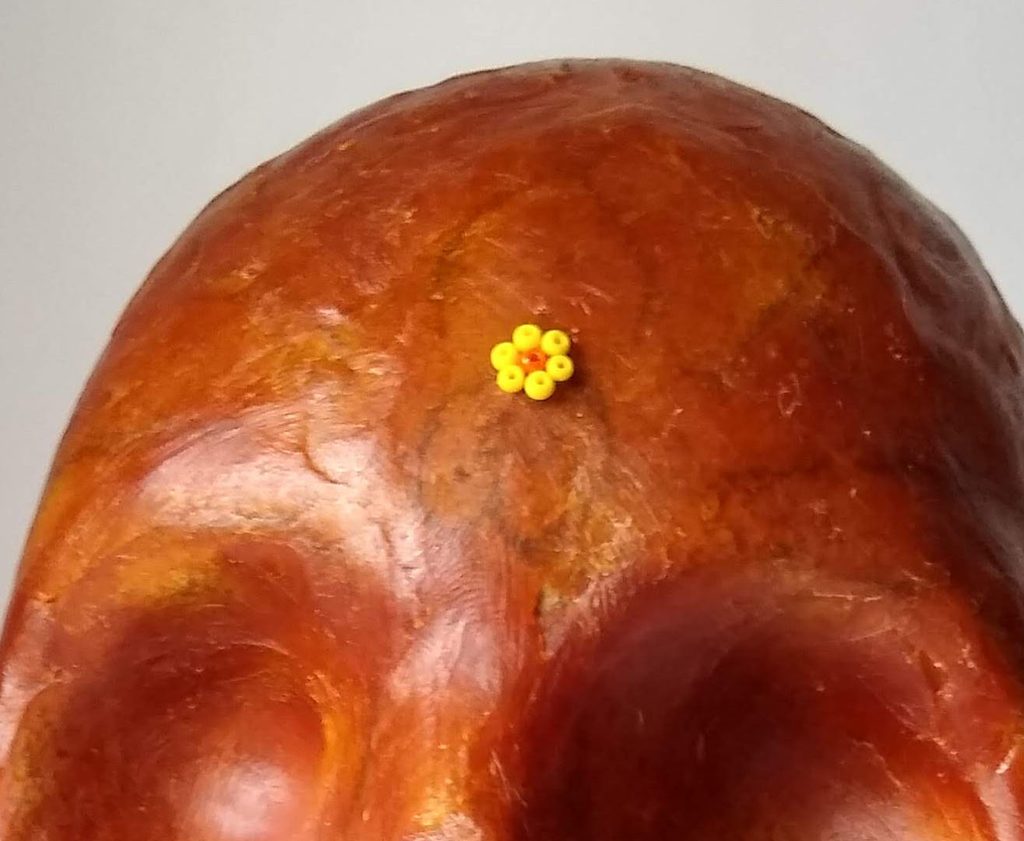
Start at the center. Press yellow beads into the wax to form a tight circle. A toothpick helps you nudge each bead into exact position.
Build the petals. Outline each petal in red, then fill the inside with orange. Work slowly, keeping beads snug against one another so no wax shows through.
Add the details. Once the petals are done, use green beads for leaves, stems, or decorative flourishes. You can also fill in the background with a contrasting color if you like.
Step 4: Finish Your Piece
Press the beads down. Lay a piece of paper or soft cloth over the design and press gently and evenly so every bead is firmly seated.
Seal it (optional). A clear varnish can protect the piece from dust and help hold the beads in place. Test your sealant on a spare area first to make sure it’s compatible with beeswax and doesn’t dull or change the bead colors.
Tips for Success
- Work in small sections. Wax can cool and lose its tackiness quickly. Spread it over only the area you’re about to bead.
- Choose glass over plastic. Glass beads give richer color and sparkle, hold up better over time, and sit more securely in the wax.
- Slow down. Huichol beadwork is a patient, meditative craft. Placing each bead deliberately is part of the process, and it’s what gives the finished piece its polish.
Final Thoughts
Making a Huichol bead flower is a rewarding way to explore a living artistic tradition. As you work, you’ll see why this art form is treasured: the colors, the rhythm of the work, and the cultural meaning behind each design. Take your time, enjoy the process, and let your piece reflect the spirit of Huichol artistry.
Frequently Asked Questions About Huichol Bead Art
What is Huichol bead art?
Huichol bead art is a traditional craft of the Huichol (Wixárika) people of western Mexico. Artisans press tiny glass beads, called chaquira, into a surface coated with beeswax or a wax-and-resin blend to create bold, colorful designs. The patterns often draw on nature, spiritual beliefs, and daily life.
What materials do I need to make a Huichol bead art flower?
You need small glass seed beads in assorted colors, a flat wooden base, beeswax, a pencil for sketching, and a toothpick or small spatula for placing beads. A craft knife and clear varnish are helpful extras.
What kind of beads are used in Huichol art?
Small glass seed beads are the standard. They give the richest color and sparkle and stay put in the wax better than plastic beads, which tend to look flat and don’t hold as well.
Do I have to use beeswax?
Beeswax or a beeswax-and-resin blend is the traditional adhesive and the one this tutorial uses. It stays tacky, holds beads securely, and lets you adjust your placement as you work. Craft glue is sometimes used as a substitute, but it dries quickly and makes it harder to fix mistakes.
How long does it take to make a Huichol bead art flower?
A simple flower on a coaster-sized base usually takes a few hours, depending on the size of your beads and how detailed your design is. Larger or more intricate pieces can take days or even weeks.
What does the flower mean in Huichol art?
Flowers in Wixárika culture are connected to the natural world, growth, and spiritual offerings. Like many Huichol motifs, they carry meaning beyond decoration, which is part of what makes the art form so rich.
Is this project suitable for beginners?
Yes. A flower with a round center and five or six petals is a great first project. Start with a small base, work in small sections, and take your time placing each bead.
How do I protect and care for finished bead art?
Keep the piece away from direct heat and prolonged sunlight, since wax can soften when warm. A clear sealant can help protect it from dust, but test it on a spare area first to make sure it won’t dull the bead colors or react with the wax.
Where can I buy authentic Huichol bead art?
Look for pieces made by Huichol artisans or sold by sellers who work directly with them. Buying authentic work supports the artists and helps keep the tradition alive. You can browse handmade pieces at Folk Art Mexico.

This tutorial was so helpful for a beginner like me. The step-by-step breakdown made it easy to understand each part of the process. I loved learning about the cultural significance behind the flower design as well. My project turned out beautifully, and I can’t wait to make more bead art!
This tutorial was so helpful for a beginner like me. The step-by-step breakdown made it easy to understand each part of the process. I loved learning about the cultural significance behind the flower design as well. My project turned out beautifully, and I can’t wait to make more bead art!
I followed this guide to make my first Huichol bead art flower, and it turned out amazing! The instructions were clear and easy to follow, especially the tips on working in sections and pressing the beads firmly. I’m definitely inspired to try more Huichol designs!